The Practice
Conservation science. Institutional strategy. One integrated practice.
The practice remains deliberately small. The institutions it advises are not.
Our Philosophy
What we believe
Cultural heritage carries obligations that most institutions understand in principle but struggle to discharge in practice. The collection is there. The responsibility is real. Resources, expertise and institutional will to protect what is in a collection's care are rarely all present at once. This gap — between acknowledged responsibility and operational capacity — is the territory this practice occupies.
This is not a management consultancy that has developed a heritage offering, nor a conservation laboratory that occasionally advises on strategy. The practice operates from the conviction that conservation science and strategic advisory produce better outcomes when integrated than when they operate in sequence. The strategy is shaped by what is technically possible. The technical work is shaped by what the institution is actually trying to achieve.
The practice works with a small number of institutions by design. Useful advice depends on understanding an institution deeply — its decision-making, its constraints, its actual capacity — and that understanding takes time. What this practice offers is not scalable in the way that large advisory firms scale. What it offers is judgement developed over decades at the intersection of conservation science, heritage policy, institutional risk and long-term stewardship.
Institutions responsible for significant cultural heritage carry an obligation on behalf of communities that extend well beyond their current stakeholders — national populations, international researchers, future generations who do not yet know what they will need from the past. That obligation shapes the practice's approach. The advice given here is not calibrated to be easy to implement. It is calibrated to serve the heritage.
Ongoing work by the practice is developing a Centre of Excellence — to be based in Canberra — to train the next generation of heritage workers: conservators, archaeologists and practitioners of skills that are disappearing. The goal is to establish an Australian-based team with the training and operational capability to respond to heritage crisis internationally — in disasters, in conflict zones, and in the many situations between — modelled on the coordination that made the wartime Monuments Men effective. The practice already includes staff who have worked in disaster and active conflict zones, and whose experience informs every engagement at home.
How an engagement proceeds
Understand
The engagement begins with the institution, not the problem. How decisions are made, which constraints are real and which are assumed, what the institution is genuinely trying to protect — these come before any assessment.
Assess
A rigorous assessment of the collection, site, risk environment or policy framework — documented with the precision required to act on it. The objective is to establish what matters most, not to catalogue every deficiency.
Advise
Recommendations that are specific, sequenced and grounded in the institution's actual capacity. Not what is theoretically optimal — what can be implemented.
Implement
Where the engagement includes implementation, the practice works alongside the institution's team. The report is not the conclusion of the engagement.
Steward
Cultural continuity is not a project with an end date. The challenges of stewardship evolve — and the collections that endure are those whose custodians continue to invest in that relationship.
The Principals
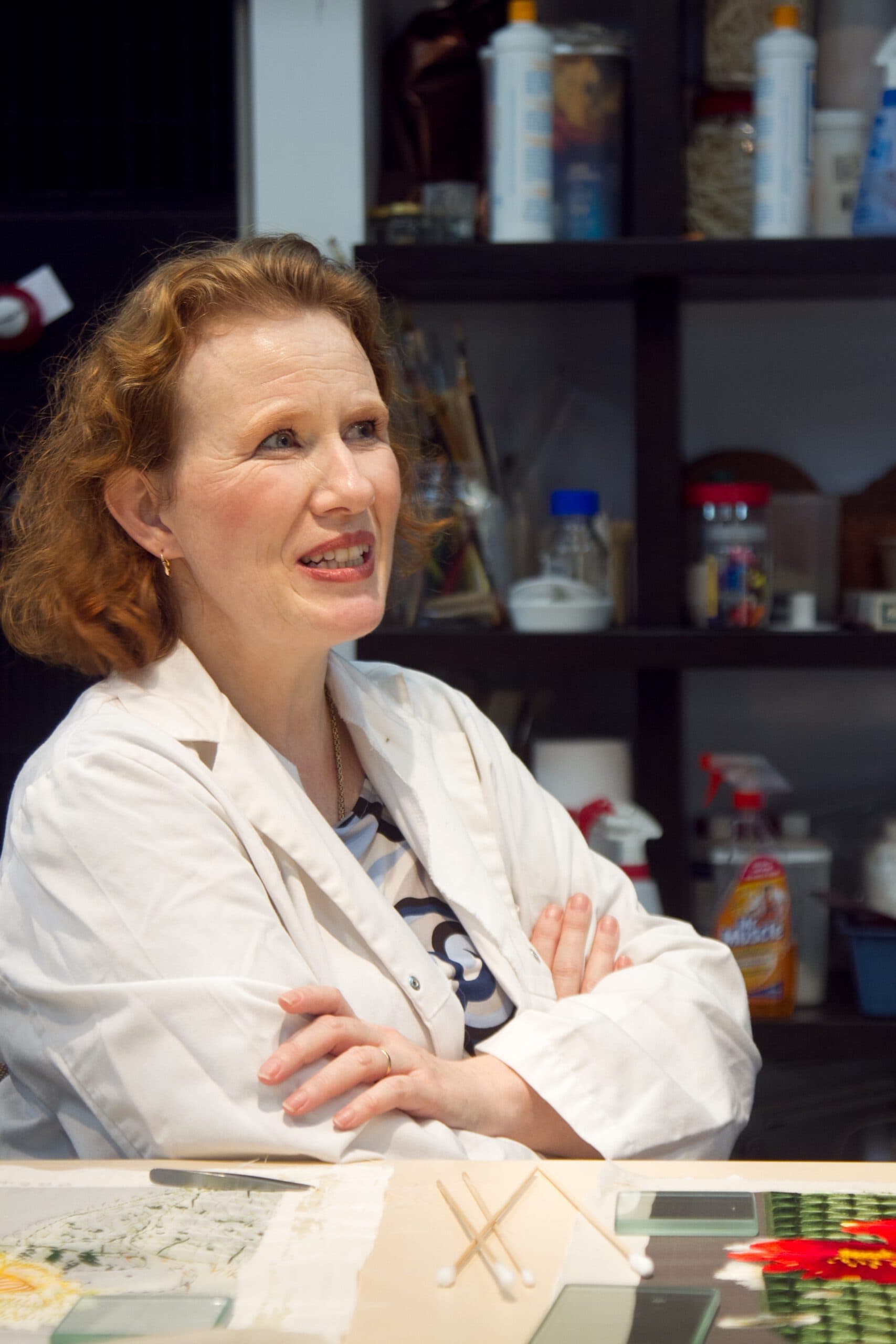
Victoria Pearce
Strategic Advisory • Heritage Risk • International Programs
Victoria Pearce's practice addresses the decisions institutions face when the stewardship of significant heritage intersects with governance, infrastructure, disaster risk and organisational capacity. These are questions that require working simultaneously at the strategic and operational level — often within institutions under genuine institutional pressure.
Her advisory work has engaged national government agencies, international bodies and senior institutional leadership across multiple countries. Clients have included the Smithsonian, the British Library and the National Textiles Museum of Malaysia. Engagement contexts have included heritage risk assessment, disaster preparedness, occupational hygiene in collection environments, heritage policy development and the building of institutional capacity where it did not previously exist.
As a member of ICOMOS‑ICORP — the International Scientific Committee on Risk Preparedness — she contributes directly to the international frameworks that guide how governments and institutions approach heritage risk. This is the body that advises UNESCO and national governments on heritage risk preparedness internationally.
The contribution this brings to the practice is strategic rigour calibrated to institutional constraint. Frameworks developed here are grounded in what the collection, the site and the technical environment will actually support — designed to be implemented, not acknowledged and archived.
- Committee Member, ICOMOS‑ICORP (International Scientific Committee on Risk Preparedness — advises UNESCO and national governments)
- Professional Member, Australian Institute for the Conservation of Cultural Material (AICCM)
- Certified Environmental Practitioner (CEnvP), Environmental Institute of Australia and New Zealand (EIANZ)
- Associate Member, Australian Risk Policy Institute (ARPI)
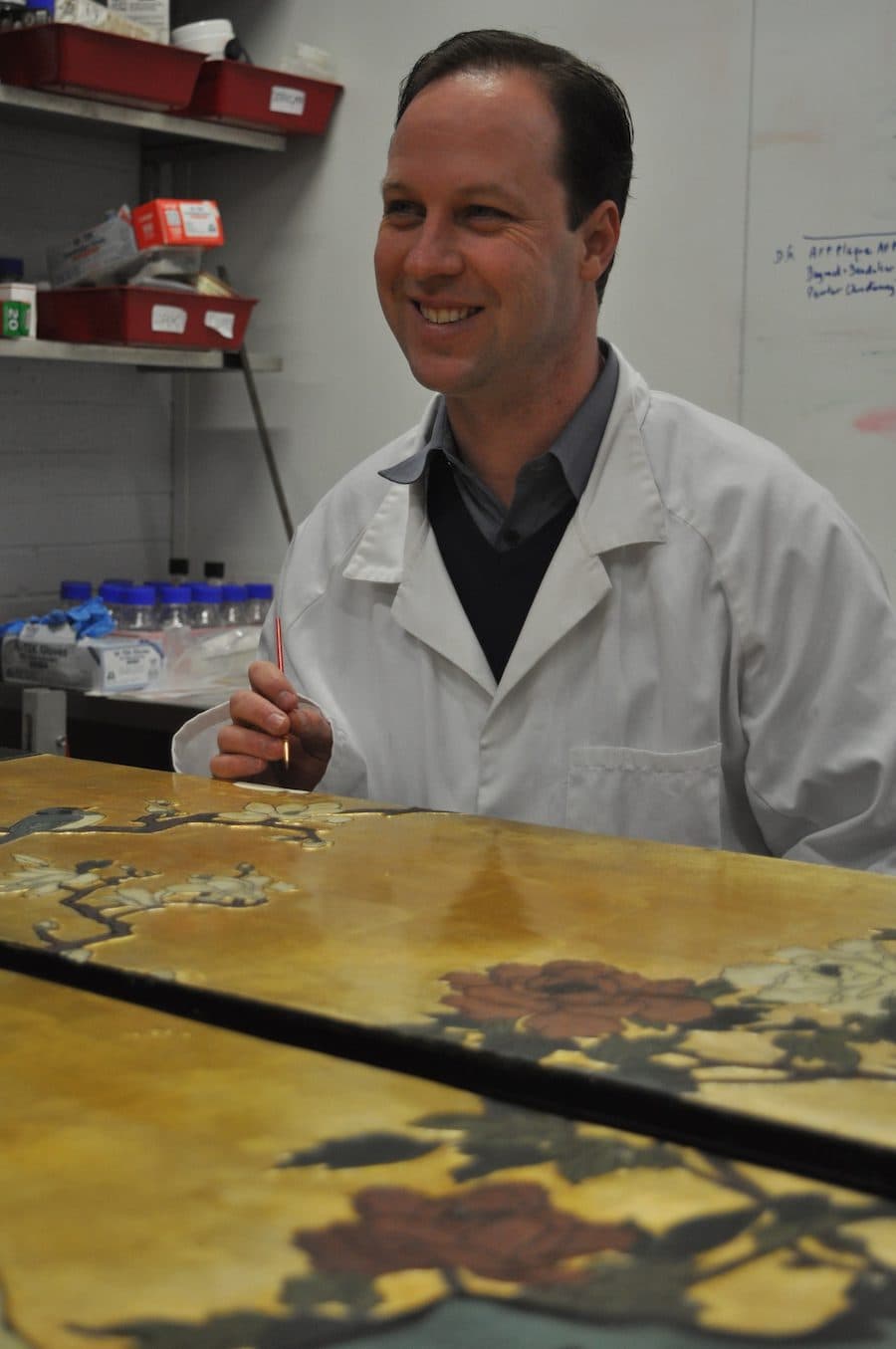
Andrew Pearce
Large Technology • Engineering Heritage • Conservation Science
Andrew Pearce is the practice's specialist in large technology, industrial and engineering heritage. His combination of objects and metals conservation, railway electrical experience, glass conservation, engineering thinking and WHS/hazard identification is unusual in Australian heritage practice.
He works with aircraft, locomotives, industrial collections and machinery where a conservation decision must account for material condition, historic integrity, mechanical and electrical systems, safe access, future use and the realities of managing a complex asset. His experience extends from nationally significant technology objects to collection recovery, needs assessments, capital works and technical training.
Andrew brings practical conservation science to decisions that protect both the object and what it can continue to do: support interpretation, tourism, reuse, institutional knowledge and long-term public value. His advice is built to inform decisions and implementation, not remain in the archive.
- Member, American Institute for Conservation / Foundation for Advancement in Conservation (AIC/FAIC)
- Member, International Institute for Conservation of Historic and Artistic Works (IIC)
- Associate Member, The Institute of Conservation (ICON)
- Associate Member, Australian Risk Policy Institute (ARPI)
Together, the practice combines strategic advisory, conservation science, risk management, research and technical delivery into one integrated consulting service.
Clients engage the practice because strategic insight and technical expertise inform each other. Every significant engagement draws on both.
Professional Standing
Professional Standing
- ICOMOS‑ICORP — International Scientific Committee on Risk Preparedness
- Australian Institute for the Conservation of Cultural Material (AICCM)
- American Institute for Conservation / Foundation for Advancement in Conservation (AIC/FAIC)
- International Institute for Conservation of Historic and Artistic Works (IIC)
- The Institute of Conservation (ICON)
- Environmental Institute of Australia and New Zealand (EIANZ)
- Australian Risk Policy Institute (ARPI)
- ICOMOS Australia
We advise a small number of institutions each year. By design.
If you are responsible for a collection that faces challenges that demand strategic thinking, we would welcome a conversation.